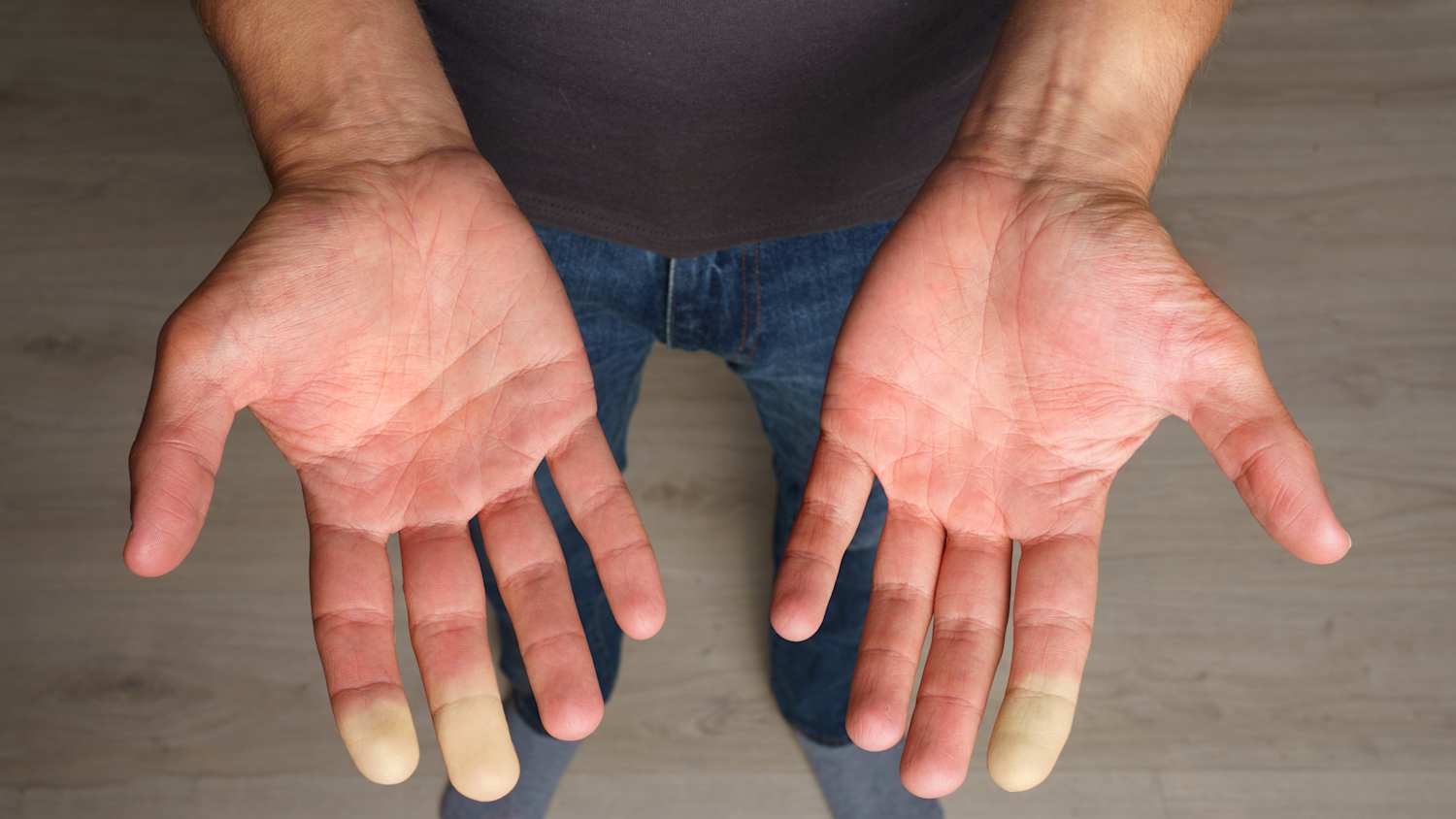
Raynaud Phenomenon
Overview
Raynaud phenomenon is a condition that causes the small blood vessels in the body, visible in the fingers and toes, to temporarily experience reduced blood flow in response to cold or emotional stress. This leads to skin color changes, numbness, and discomfort. While many people have mild symptoms that respond to lifestyle changes, some individuals may have more persistent or severe symptoms that require additional care. There are several treatment options that can help reduce the number and severity of attacks and lower the risk of complications. With appropriate management, people with Raynaud phenomenon can often maintain their daily activities.
What is Raynaud phenomenon?
Raynaud phenomenon is a disorder in which small blood vessels in the body constrict more than normal when exposed to cold or stress. This narrowing of blood vessels reduces blood flow, causing the skin of the fingers and toes to change color and feel cold or numb.
There are two main types of Raynaud phenomenon. Primary Raynaud phenomenon occurs without any other underlying disease and is the most common form. Secondary Raynaud phenomenon happens along with another health problem, such as an autoimmune disease such as lupus or scleroderma, or after certain environmental exposures or injuries. The secondary form is less common but tends to be more serious.
Raynaud phenomenon usually affects the fingers and toes, but in rare cases, skin color changes can also involve the ears, nose, face, knees, nipples, or tongue. Attacks often start in one finger or toe and may spread to others. The thumbs are typically not affected in primary Raynaud phenomenon. The condition can cause discomfort and changes in skin color, but most people with the primary form do not develop any tissue damage.
What causes Raynaud phenomenon?
Raynaud phenomenon happens because the blood vessels in the skin react too strongly to cold temperatures or emotional stress. Normally, the body narrows blood vessels to conserve heat, but in Raynaud phenomenon, this response is exaggerated.
Researchers believe that in primary Raynaud phenomenon, blood vessels in the fingers and toes may react this way because of heightened sensitivity in specific receptors known as alpha-2 adrenergic receptors in blood vessel walls. This increased sensitivity can make the vessels constrict more easily when triggered.
In secondary Raynaud phenomenon, the narrowing of blood vessels is caused by damage from another disease, such as scleroderma or lupus, or from exposures such as vibrating tools, certain chemicals, or injuries. These underlying problems can disrupt the normal function of blood vessels, leading to more severe and longer-lasting attacks and/or tissue damage (finger sores).
Factors such as hormones, nerve activity, and genetics may contribute; for instance, estrogen might affect how blood vessels respond, and having relatives with Raynaud increases the risk, though the exact genetic links remain unclear.
What are the risk factors for Raynaud phenomenon?
Risk factors for Raynaud phenomenon include genetics, gender, age, and underlying medical conditions. These include the following:
- Family history of Raynaud phenomenon increases risk
- Women are more likely to develop the condition, especially the primary form
- Primary Raynaud phenomenon often begins before age 30
- Smoking or vaping can worsen symptoms and trigger attacks
- Exposure to cold or vibrating machinery is linked to a higher risk, particularly for secondary Raynaud phenomenon
- Certain autoimmune diseases, such as lupus or scleroderma, are associated with secondary Raynaud phenomenon
- Some medications, including those for heart disease, migraines, or attention-deficit/hyperactivity disorder (ADHD), may provoke symptoms
- Previous frostbite or nerve injury in the fingers can contribute to development
- Thyroid problems, clotting disorders, or carpal tunnel syndrome may be related to secondary Raynaud phenomenon
- Contact with chemicals like polyvinyl chloride or specific drugs can also play a role
What are the symptoms of Raynaud phenomenon?
Raynaud phenomenon causes episodes, or “attacks,” that affect the fingers, toes, and sometimes other areas. These episodes can last from several minutes up to a few hours.
Symptoms can range from mild to severe and are often triggered by cold or stress. They may include:
- Fingers or toes may feel numb, cold, or tingly during an episode
- The skin may first turn pale, then blue, then, as circulation returns, red
- Pain or aching can occur, especially in severe or secondary cases
- Temporary mottling or purplish skin may appear and usually fades with warmth
- Severe or prolonged attacks may lead to sores or ulcers at the tips of fingers or toes
Attacks often start in one digit and can spread to others, typically affecting both sides equally. The thumbs are less commonly involved, particularly in primary Raynaud phenomenon. Rarely, areas such as the ears, nose, face, knees, nipples, or tongue may be affected.
How is Raynaud phenomenon diagnosed?
To diagnose Raynaud phenomenon, a doctor typically reviews a patient's medical history, performs a physical exam, and orders one or more diagnostic tests.
The doctor will ask about the pattern of attacks, triggers such as cold or stress, age when symptoms began, and which areas are affected. Doctors may also ask about exposure to cold, vibrating tools, chemicals, or medicines that could trigger symptoms. The medical history helps to distinguish Raynaud phenomenon from other conditions and to identify possible underlying diseases.
During the physical exam, the doctor looks for color changes in the skin, checks for symmetry between both hands or feet, and looks for any signs of tissue damage, ulcers, or other complications.
Medical tests may be used to confirm the diagnosis or to look for underlying causes:
- Nailfold capillaroscopy, in which the doctor examines the skin at the base of the fingernails under a microscope to check for changes in tiny blood vessels, helps distinguish between primary and secondary forms.
- Blood tests, such as antinuclear antibody (ANA) tests or thyroid function tests, can help identify autoimmune diseases or thyroid problems linked to secondary Raynaud phenomenon.
- Vascular imaging, such as ultrasound or angiography, may be used if attacks are asymmetric or if there is concern for blocked blood vessels.
How is Raynaud phenomenon treated?
Raynaud phenomenon is treated through lifestyle changes to maintain warmth and reduce stress, oral medications to improve blood flow, and, in severe cases, intravenous medications to prevent additional tissue damage. Many people can manage symptoms by staying warm and avoiding triggers (e.g., excess caffeine, nicotine, cold exposure), while others may require medical care to reduce the frequency and severity of attacks. Treatments include:
- Dress in layers and wear mittens or gloves to keep the body and extremities warm
- Wear a heated vest and use hand warmers
- Quickly warm affected areas during an episode, for example by placing hands under warm water
- Stop smoking or vaping to reduce blood vessel narrowing
- Review medications with a doctor to avoid those that may trigger symptoms
- Practice stress management techniques to lower the chance of attacks
- Take care of skin by moisturizing and treating any cracks or sores promptly
If lifestyle changes are not enough, medicines may be used:
- Calcium channel blockers (such as amlodipine or nifedipine) are often the first choice and help relax blood vessels, reducing the frequency and severity of attacks.
- Phosphodiesterase inhibitors (such as tadalafil or sildenafil) may be used if calcium channel blockers are not effective or cannot be taken. These medications help relax and widen blood vessels to improve circulation.
- Topical nitrates (such as nitroglycerin ointment) can be applied at the base of affected fingers to help widen blood vessels.
- Other medicines, such as angiotensin receptor blockers (losartan) or selective serotonin reuptake inhibitors (fluoxetine), may be considered if needed. These medications help keep blood vessels open and improve circulation.
- For severe cases with tissue damage, intravenous prostaglandins (such as epoprostenol) may be given in a hospital to quickly improve blood flow.
- Surgery to cut certain nerves that cause blood vessels to narrow (known as sympathectomy) may be used for severe cases that do not respond to other treatments.
- Low-dose aspirin or other antiplatelet medicines (drugs that prevent blood cells from sticking together to form clots) may be used in some cases to prevent blood clots, especially if ulcers are present.
- Botulinum toxin (Botox) injections can also be tried at the base of affected fingers.
What are the potential complications of Raynaud phenomenon?
Raynaud phenomenon can lead to several complications, especially in people with the secondary form or severe symptoms.
- Skin ulcers may develop at the tips of fingers or toes due to prolonged lack of blood flow.
- Gangrene (death and decay of tissue) can occur if blood flow is blocked for an extended period, sometimes requiring surgery or amputation.
- Persistent pain or aching may result from repeated attacks or tissue damage.
- Loss of sensation or clumsiness in the hands or feet can affect daily activities.
- Infections may develop in areas with ulcers or dead tissue.
- Severe attacks that do not resolve or cause sores should prompt urgent medical attention to prevent further tissue loss.
- People with secondary Raynaud phenomenon may experience more frequent and severe attacks, which can make daily life more challenging and require ongoing treatment.
What is the outlook for people with Raynaud phenomenon?
The outlook for people with Raynaud phenomenon depends on the type and severity of the condition. Many people with primary Raynaud phenomenon have mild symptoms that can be managed with lifestyle changes, and some may notice improvement or even periods without symptoms over time. In contrast, those with secondary Raynaud phenomenon may have more severe symptoms and a higher risk of complications, such as ulcers or tissue loss, especially if an underlying disease is present.
Older adults and people with other health problems may have a higher risk of complications, including heart problems. Regular medical care and attention to triggers can help prevent serious issues. With proper management, many people are able to maintain a good quality of life and avoid major complications.
What stands out about Yale Medicine’s approach to Raynaud phenomenon?
“The Yale Scleroderma Program is a regional and national center of expertise in the diagnosis and management of patients with scleroderma,” says Monique Hinchcliff, MD, MS, a Yale Medicine rheumatologist and director of the Yale Medicine Scleroderma Program. “Yale offers a team-based approach to care that involves specialists in the care of the skin, lungs, heart, gastrointestinal tract, and genitourinary tract. Specific to the treatment of Raynaud phenomenon, we are the first center in the state to develop programs to permit IV epoprostenol administration in the hospital and infusion suites for threatened digital loss due to gangrene. As with all complications from scleroderma, we follow a team approach to achieve the best outcomes for our patients.”