How To Stretch Before a Run—Properly

Many runners know that they should stretch, but that doesn’t mean they do. And even if they take the time to loosen up their muscles, they may not be doing the right stretches—or performing them properly.
It doesn’t help that the thinking on stretching—whether it’s best to do it before or after a run, for example—has changed over time. Guidance on the type of stretching has also evolved, with a shift toward dynamic movements instead of the static bend-and-touch-your-toe type of stretch. But many runners are creatures of habit and may still be doing the same stretches they picked up decades ago on the track team.
The good news is that it’s never too late to start stretching—or to start doing it correctly. And now is an especially good time to brush up on technique as the pandemic has ushered in a running renaissance.
We caught up with Elizabeth Gardner, MD, a Yale Medicine orthopaedic sports medicine surgeon, to get the latest on stretching.
Why is it important to stretch before a run?
Before asking muscles to suddenly increase their activity, such as going for a run, it’s important to give them preparation time. When seated, many of our muscles contract or shorten because of the position. But during running, these muscles are stretched. If the shift from sitting to running is done too quickly, there is risk for injury—a pre-stretched muscle can handle and resist stress better than an unstretched one.
But stretching will only help if you do it properly. [See below.]
Should you stretch before every run?
Yes. Some sort of stretching is very important prior to running or any exercise for both injury prevention, as well as to improve the quality of your workout. However, the generic term “stretching” includes different types of exercises. Ideally, your pre-run warmup should include some dynamic activity that replicates the motions of your workout. This allows the muscles to be slowly stretched in a controlled manner. These can be done either before you start your run, or after five to 10 minutes of a gentle jog.
What is dynamic stretching and why is it better than static stretching before a run?
Static stretching is what you likely remember from gym class. It is reaching down to touch your toes, or stretching your arm across your body to stretch your shoulder. Typically, these stretches are held at the point of mild discomfort for at least 30 seconds.
We’ve learned that a static stretch, when done before any activity, does not have the desired effect. This means that you aren’t preventing injuries, and in fact, there is some evidence that it can actually negatively affect workouts.
Dynamic stretching, on the other hand, involves performing gentle repetitive motions in a way that gradually increases motion, circulation, and muscle length. Arm swings that start small and gradually increase to become bigger (but always remain within the normal range of motion) are a good example. When these replicate the activity that you are about to perform, such as running, they allow the muscles to stretch and the blood flow to those areas to be optimized.
Why is it important to stretch both sides of the body?
Maintaining symmetry in the movement and strength of the body is key to avoiding both overuse and acute injuries. It is important that both sides of the body move the same way to allow for an even and consistent movement pattern, such as a running gait or weight-lifting motion.
Can you describe the best dynamic stretches to do before a run?
Here are five good stretches.
1. Side lunge
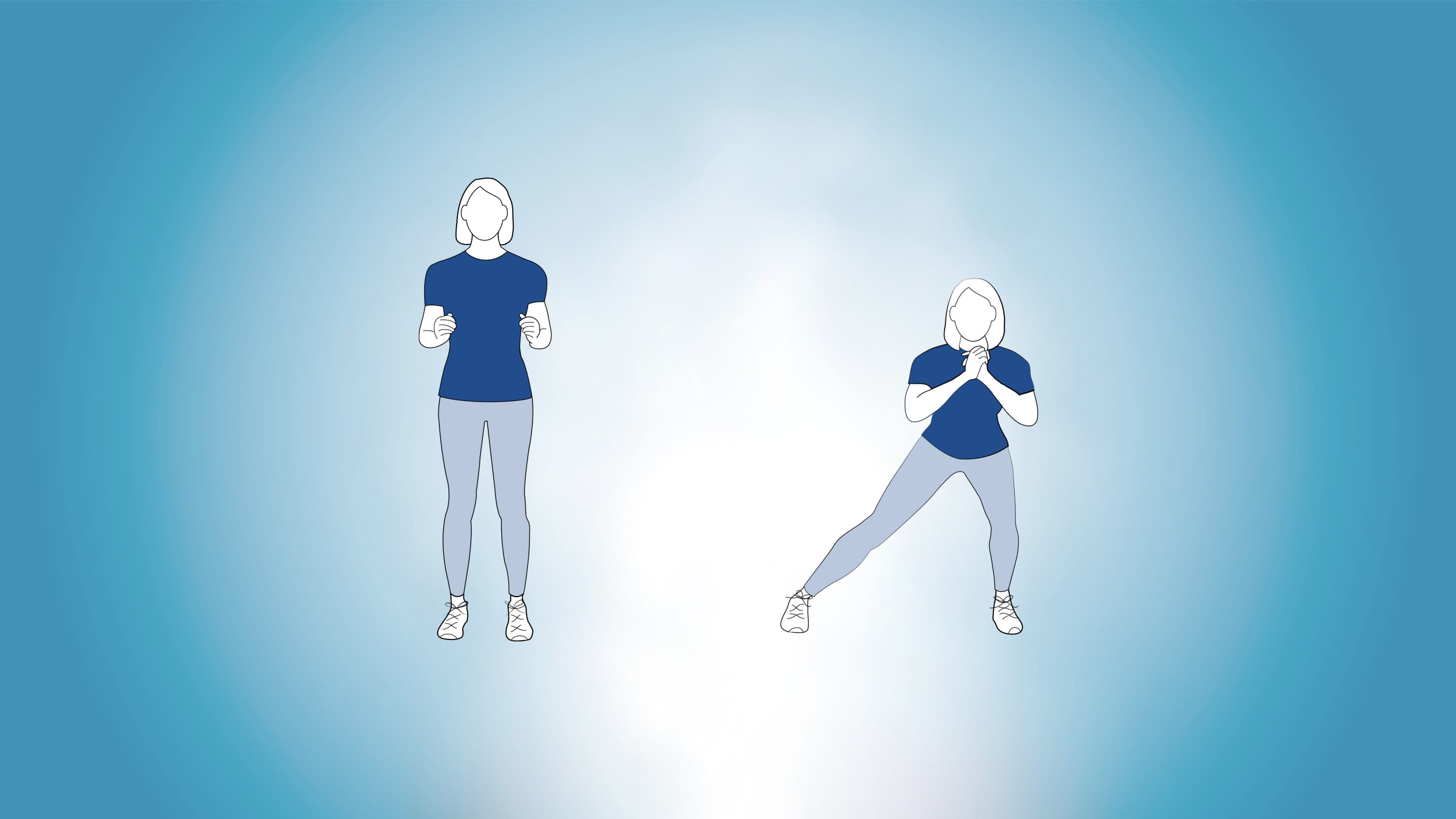
Stand with a wide stance (greater than your hip/shoulder width) but not so wide that you feel a stretch. With both feet pointing forward, bend your left knee, allowing your hips to sit backwards, and shift your weight to over your right foot as you step to the right. As you move, keep your upper body upright and your core engaged. Then return to standing. Repeat this for 10 reps, then switch sides. This targets the hip abductors/adductors, and engages the core stabilizing muscles.
2. Glute and piriformis activation
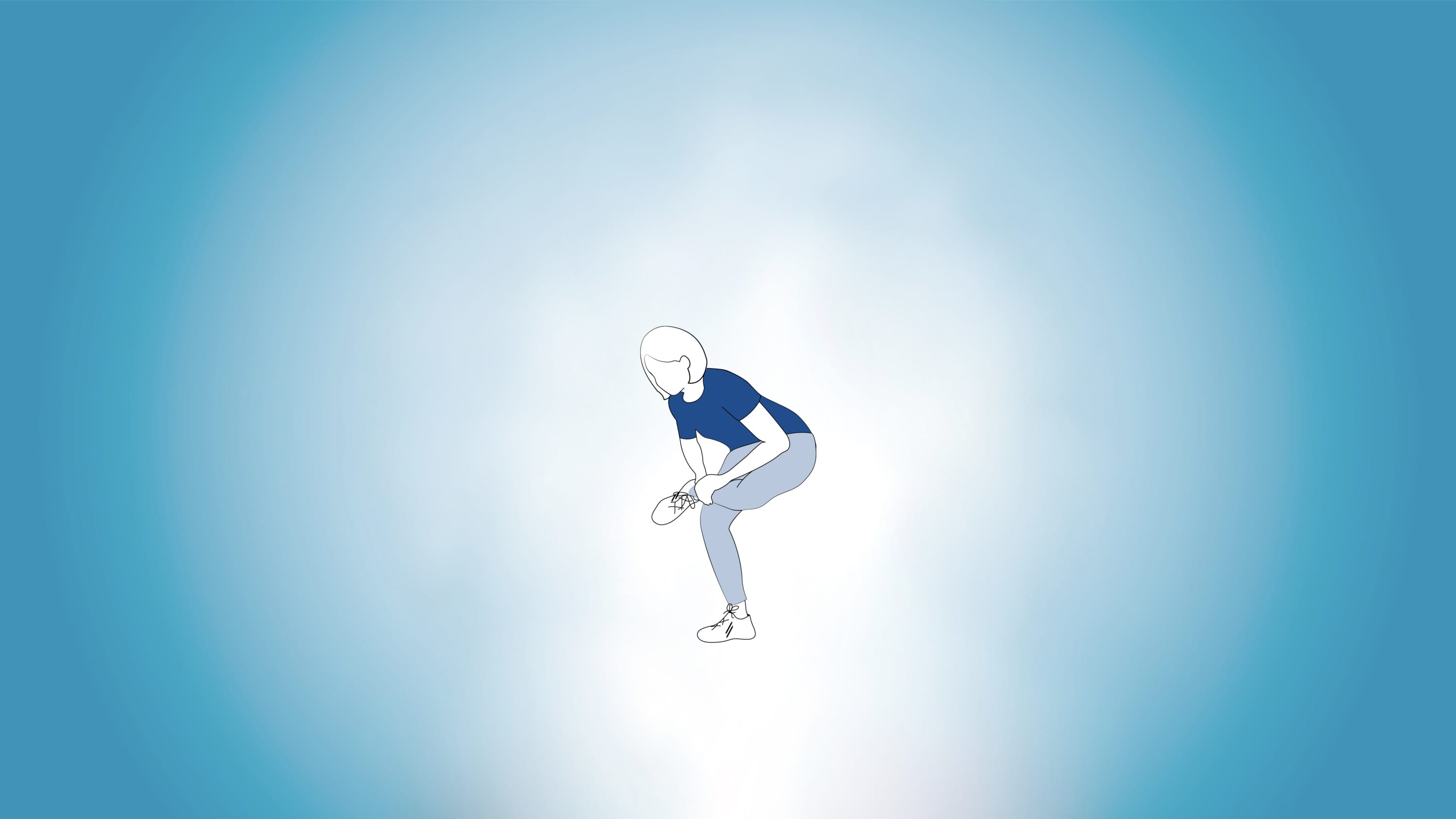
Standing straight in a balanced position, shift your weight to your right leg. Lift your left ankle upwards and bring it across your right leg (like sitting cross-legged in a chair). Grasp the left ankle with your hands to feel a stretch. Hold for approximately three seconds, then release the left ankle. Then, do the same thing with your right side. Repeat this, alternating legs over 25 yards at a slow, walking pace. This targets the gluteus and piriformis muscles.
3. Arm swings
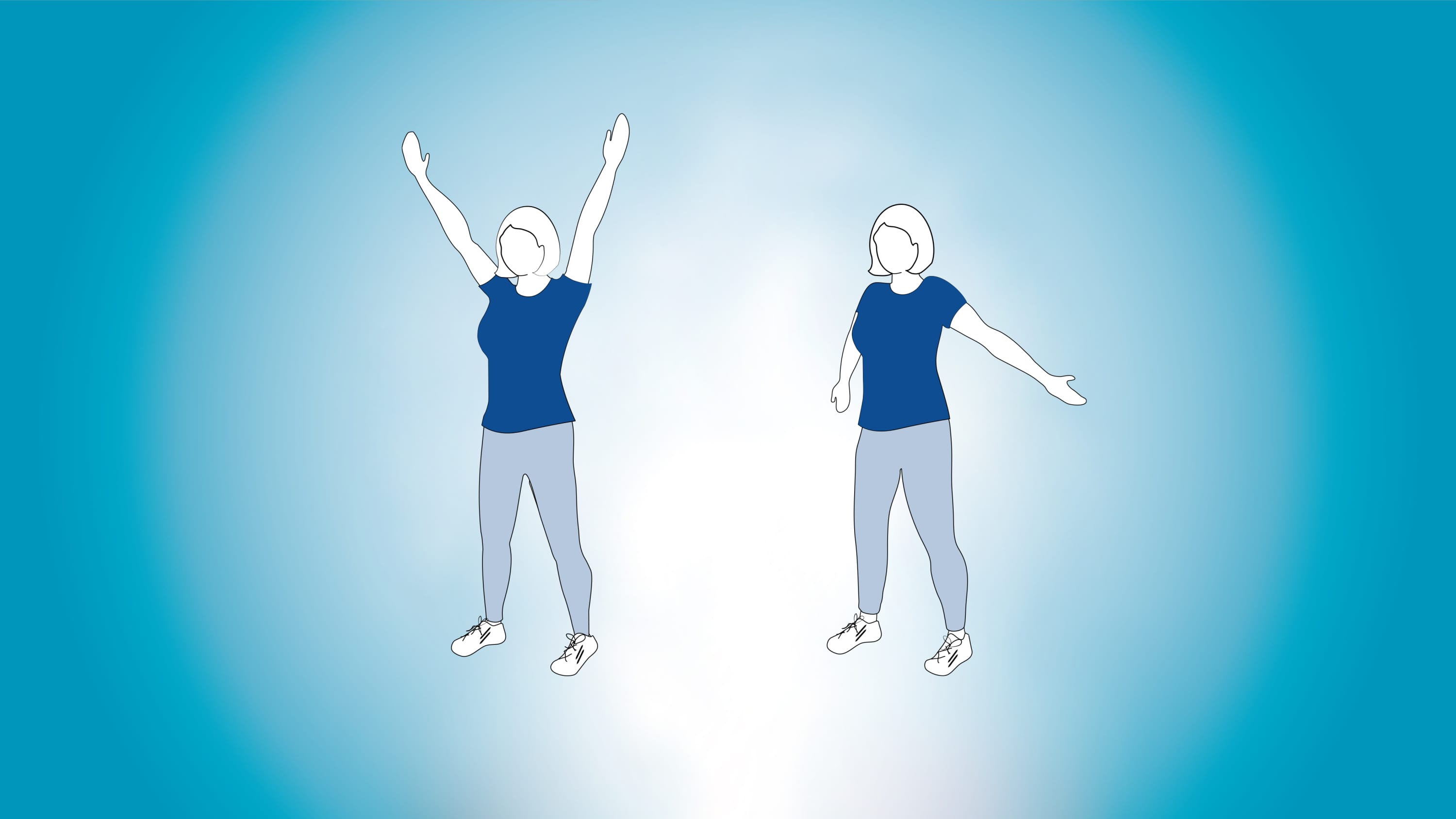
Standing in a stable position, using both arms at once like a windmill, start to swing the whole arm such that it comes up straight in front of you and then around behind you. Start with small circles and gradually allow momentum to build, increasing the size of the arm swing. You may also gradually change the angle of the swing to come more in front of you. Do this for 30 seconds. This stretch targets the muscles of the shoulder, chest, and upper back that are involved with arm-swinging during running.
4. Bent-knee forward swing
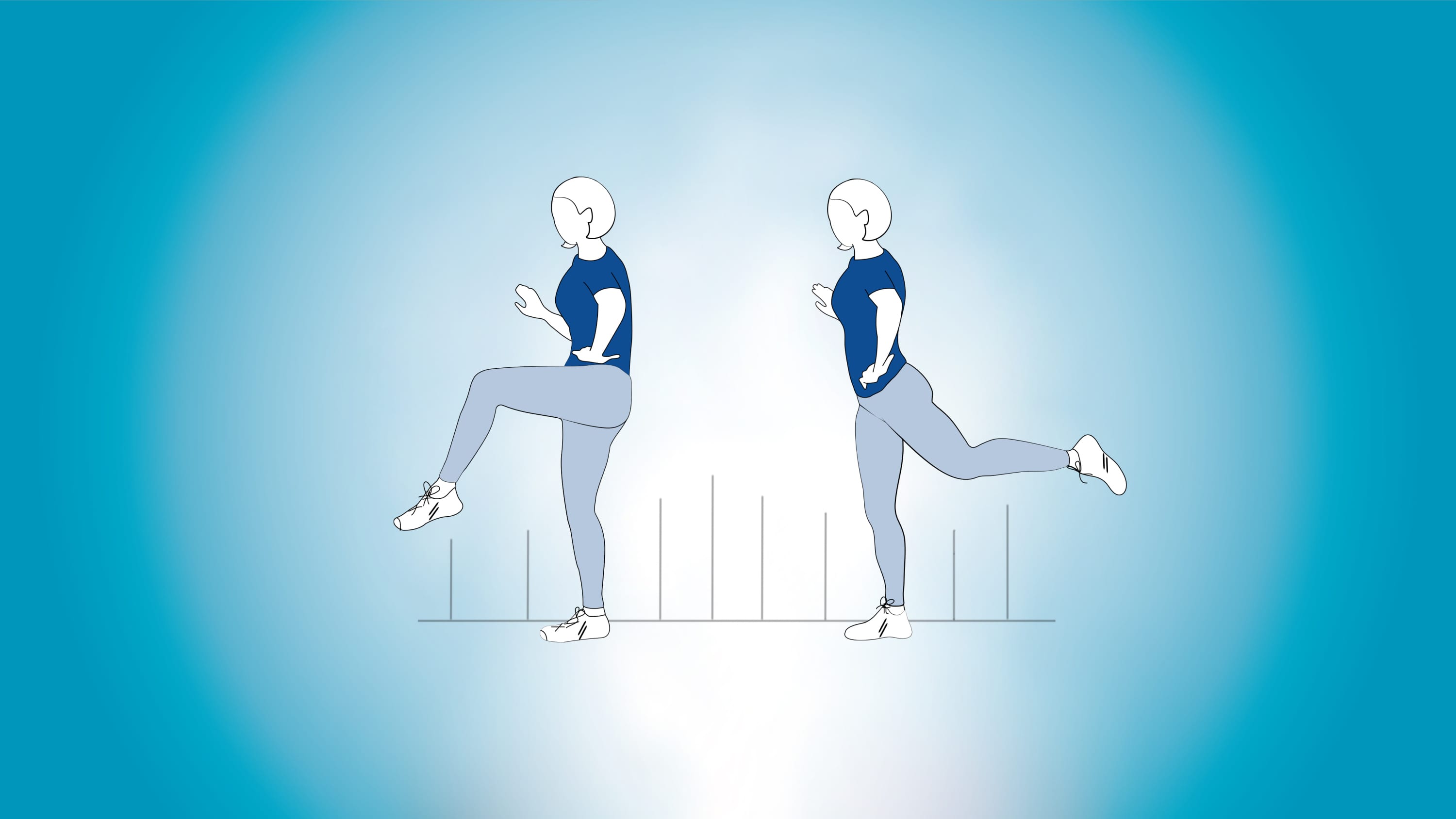
Stand alongside a wall or fence for support. Stand stably on your right leg. Then bend your left knee upwards in front of you to a 90-degree angle. Keeping your hips pointing forward, drive the knee up toward your chest, then extend it straight out behind you. Repeat 10 times then switch legs. This targets the hip flexors.
5. Straight-leg lateral swing
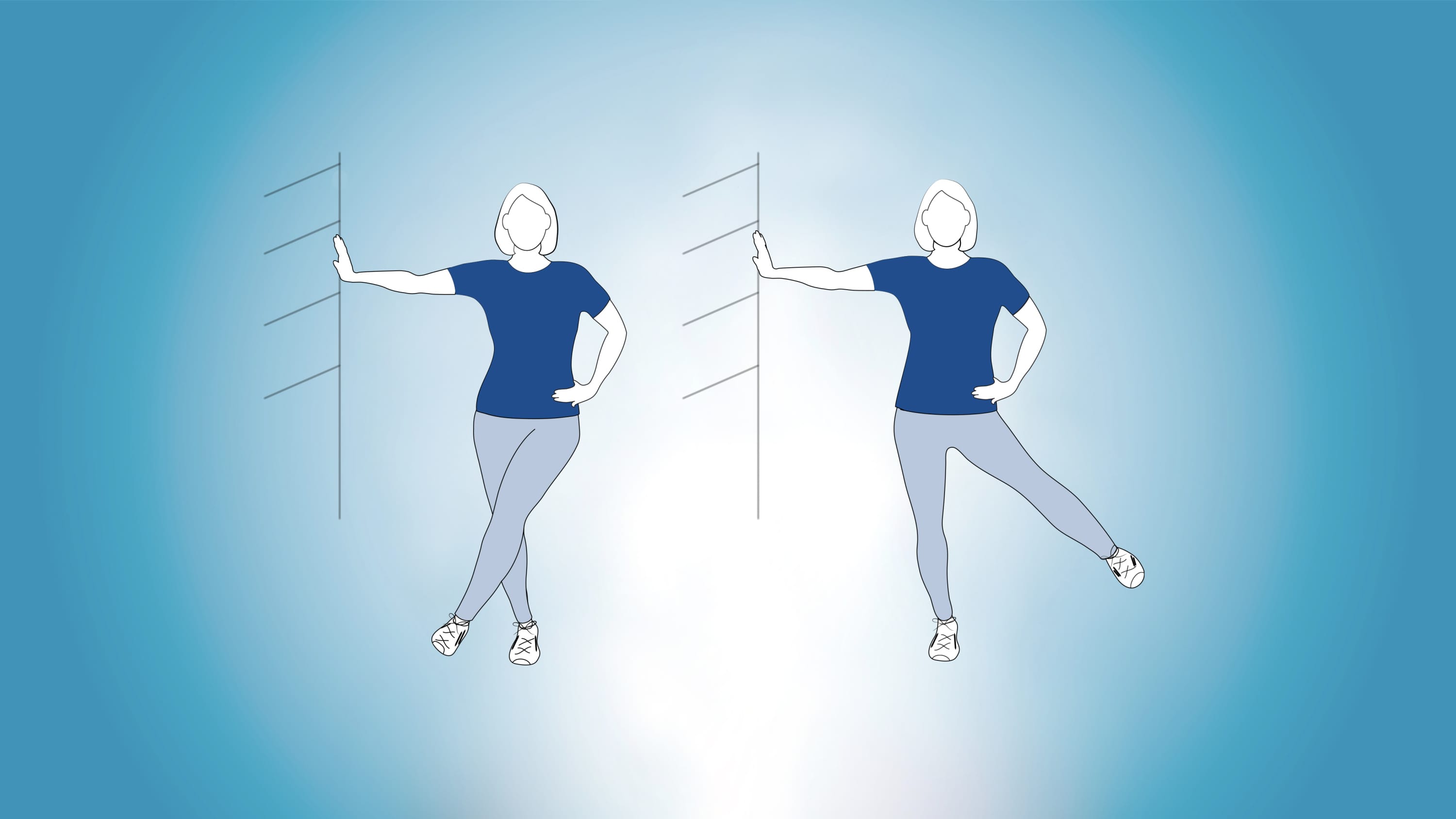
Stand with a wall or a fence to one side, using it for support. Stand stably on your right leg. Then lift up your left leg to swing it out to the left, then across your body to the right side just in front of your body, using smooth, fluid motion, keeping your hips pointing forward. Repeat 10 times then switch legs. This targets the hip abductors and adductors.
Should you stretch after your run, too?
Ideally, yes. During exercise, the heart rate rises to deliver oxygen to the muscles. Stretching allows the heart rate to gradually decrease and return to normal. After a vigorous run, muscles will also be full of lactic acid. Stretching helps the blood flow to the muscles to remove the lactic acid, which improves recovery. Finally, stretching after a run helps to relax any muscles that may have gotten tight from exertion, and this can help to prevent pain and stiffness later.

