Real-Time Medical Advances: COVID Clinical Trials Moved Fast
A structure was in place
Though the pandemic presented many opportunities to conduct impactful scientific research, there were also obstacles. “I don’t think any of us would deny that this has been challenging in ways you might not think about,” says Dr. Smith. For example, in normal times researchers often work closely together—maybe sharing a microscope in a laboratory so that more than one person can look at something. “The need for physical distancing was challenging,” Dr. Smith says. And researchers needed personal protective gear, such as N95 respirators, which at times were very hard to get.
Another issue was communicating about clinical trials with family members of people who were being treated in the hospital. “We couldn’t connect with families by the bedside—it had to be by phone or Zoom,” says Dr. Dela Cruz. “It’s a random person calling on the phone saying your loved one is not doing so well and there are clinical trials available. But many of our families were willing to participate to make their loved ones better.”
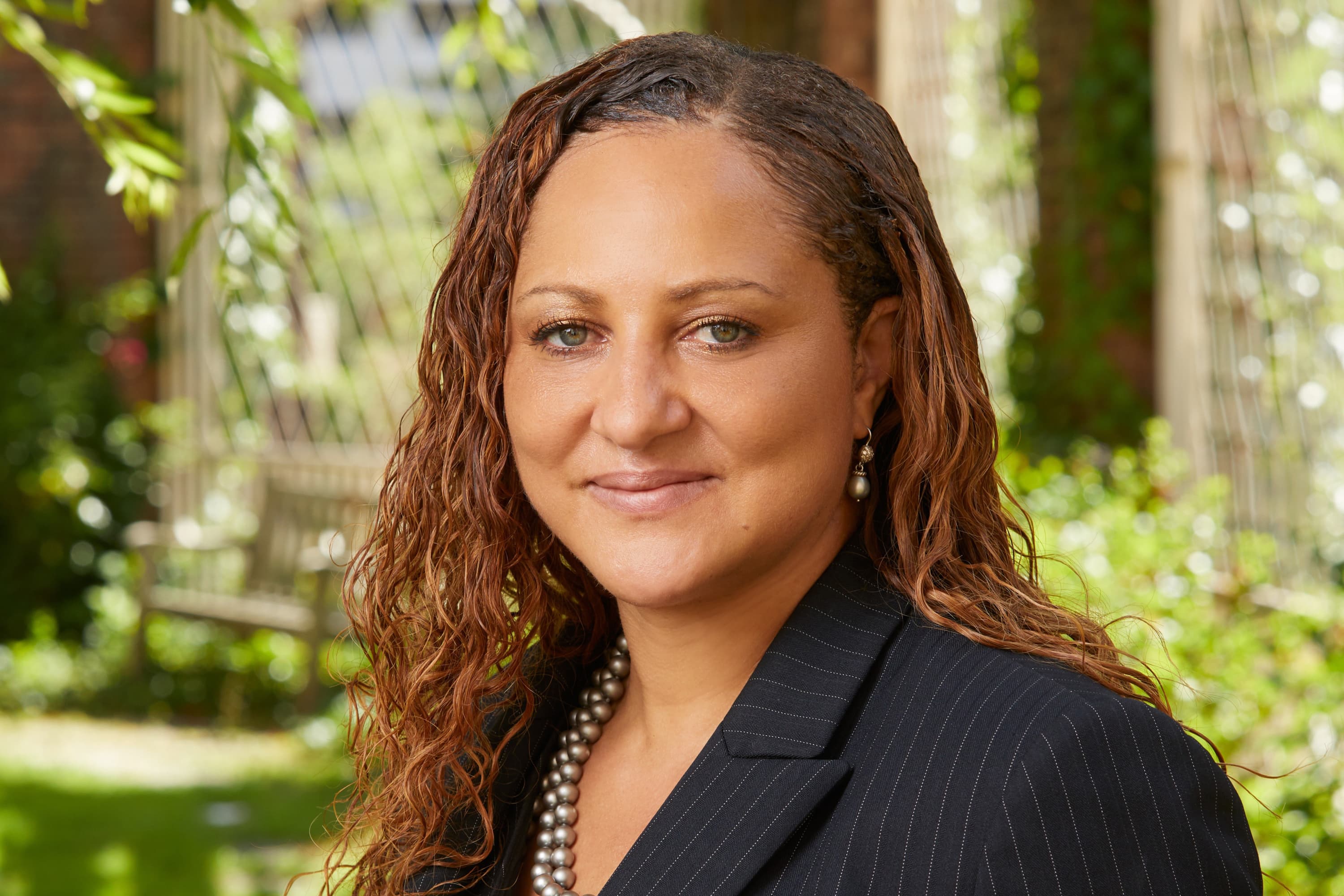
"We had studies that literally went from early-stage concept review to activation in four or five days, and that just wasn’t heard of before COVID,” says Tesheia Johnson, MBA, MHS, deputy director and chief operating officer of YCCI.
Up-to-date technology was invaluable. The electronic medical record provided real-time data (with privacy safeguards in place) that allowed researchers to monitor the COVID-19 situation as it evolved, providing quick views of how many patients were in the hospital or on ventilators at a given point. “That data was also being shared across the country,” Dr. Smith says.
Zoom and telehealth platforms helped, too, and may bring permanent changes to the world of medical research. “I think what we’re seeing is this real trend—people love the fact that they can participate in a clinical trial with fewer visits to Yale,” Johnson says. “They say, ‘This is great, I would participate in more studies if I could do it from my living room.’ So, these are the things we need to keep doing.”
Minority participation
COVID-19 intensified the challenges of convincing people of diverse backgrounds to join a clinical trial. The virus hit people of color especially hard—American Indians, Black Americans, and Latinos are all about three to four times more likely to be hospitalized from the disease than white Americans.
But, at Yale, more than 40% of the participants in YCCI’s Phase 3 Pfizer vaccine trials were people of color, and that’s partly thanks to another organization that was already in place: the 10-year-old YCCI Cultural Ambassadors program, a partnership between YCCI, the African Methodist Episcopal (AME) Zion Church, and Junta for Progressive Action, that aims to increase diversity so that research will benefit people of all backgrounds. The Ambassadors distributed masks and shared important information in their communities about the need to help find cures and test vaccines.
One of those ambassadors was Rev. Leroy O. Perry, paster of St. Stephen’s AME Zion Church, who shifted his efforts as an Ambassador to the pandemic. “There is social, psychological, and historical resistance when it comes to minority involvement in medicine in America,” Rev. Perry says. “Much of our work over the past 10 years has been dedicated to addressing the concerns that have caused this resistance.” He now meets weekly with health professionals and community leaders making sure people in the community have accurate information about the vaccines as well as access.
“I personally took part in the Pfizer study to demonstrate the need for minority participation and to hopefully arrest any fears as to the safety of the vaccine,” Rev. Perry says. He encouraged family members, friends, and parishioners in his church to do the same.
How could COVID-19 steer future clinical trials?
In 2021, the pandemic continues to be unique in the world of clinical trials, says Dr. Dela Cruz. “Nobody could have imagined this,” he says. “It’s almost like a big experiment, where you have one virus infecting a large population. One of the lessons is that you really can achieve a lot when everyone’s attention is on one thing—and that’s everybody, not just clinicians and researchers, but also companies, government agencies, funders, and policymakers.”
Still, researchers hope COVID-19 clinical trials at Yale and across the country will motivate more people to participate in trials for all kinds of diseases, even in normal times. “I share the success of my congregation in Branford. Ninety-seven percent of them have taken the vaccine, and five participated in the Pfizer study,” says Rev. Perry, who hopes this will set an example for the future.
Dr. Smith hopes people will look at effective COVID-19 vaccines that are already being administered and the treatments that could help prevent severe illness in the future and realize the role clinical trials play in medical care. “This is how we make advances in the ways we care for patients, families, and the greater community,” he says. “It’s good for me. It’s good for you. And it’s good for all of us together.”