Natural Cancer ‘Cures’: What Are the Risks?

This story was originally published on July 1, 2019. It was updated on March 24, 2026.
Skyler Johnson, MD, a former Yale School of Medicine chief resident of therapeutic radiology, knows firsthand what it’s like to experience the fear and confusion that come when a family member is diagnosed with cancer. His wife, Laurie, was diagnosed with Hodgkin lymphoma at age 27. Dr. Johnson—then still in medical school—recalls typing her diagnosis into Google and being bombarded with claims of miracle cancer “cures.”
Fortunately, Dr. Johnson had the medical training to recognize good sources of cancer research. But he and his colleagues are concerned that many people who are overwhelmed by a cancer diagnosis do not.
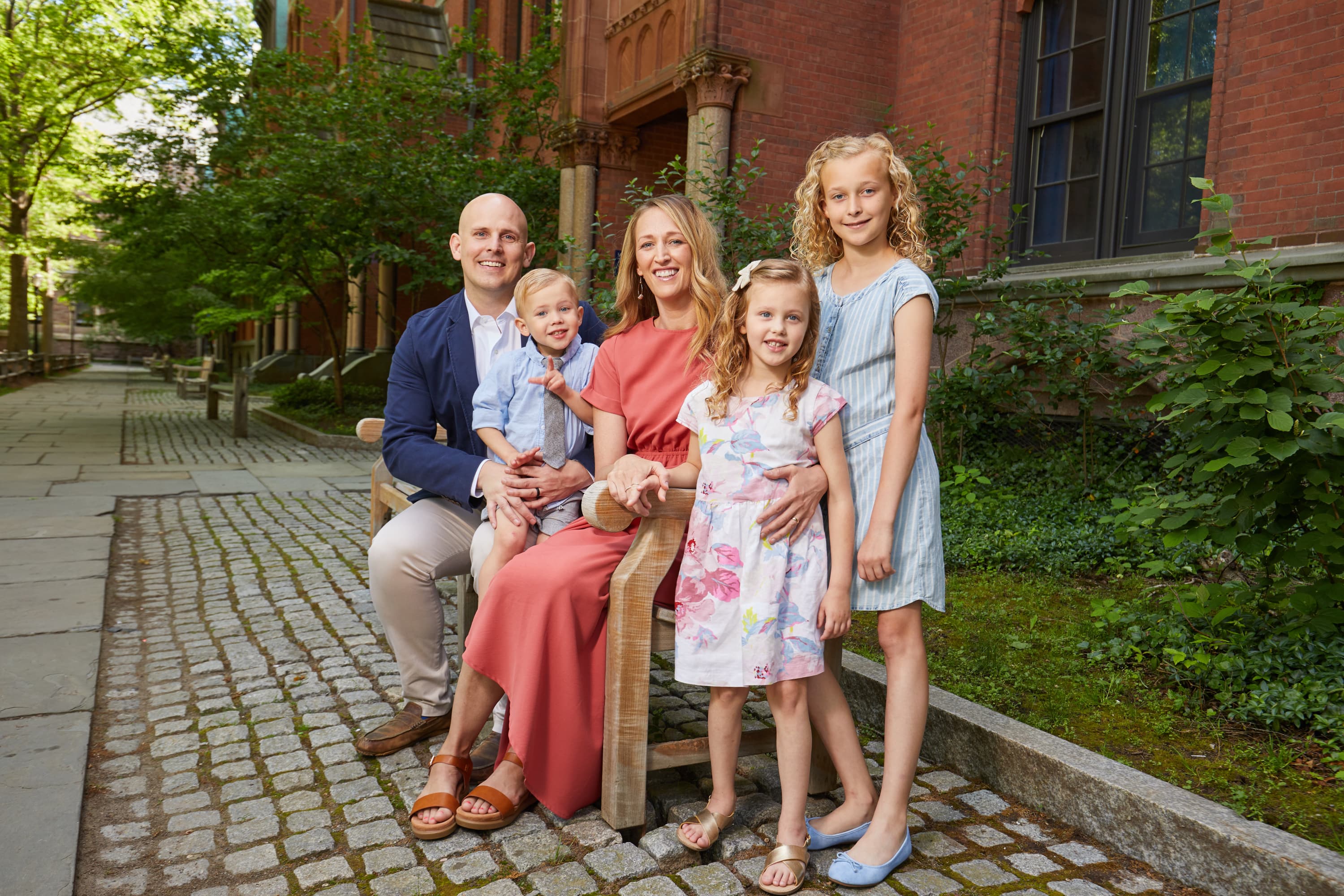
Dr. Johnson with his wife, Laurie, and their three children.
“It’s an alarming trend,” he says. “Some patients choose to forego or delay cancer treatments that have been proven to prolong life and/or cure their cancer, in favor of unproven therapies.”
Patients are looking to alternative answers, trying Chinese herbs, vitamins, minerals, meditation, tai chi, yoga, bee venom, and extreme dieting. Trying these nonmedical approaches instead of conventional, doctor-recommended cancer treatments (chemotherapy, surgery, radiation therapy, immunotherapy, and hormonal therapy) is called alternative cancer treatment. Using these nonmedical approaches in addition to doctor-recommended medical treatments is called complementary cancer treatment. According to one study, an estimated 48 to 88 percent of people with cancer report using complementary treatments.
“Many patients who use complementary and alternative medicine for cancer believe their use will result in improved survival,” says Yale Medicine radiation oncologist James Yu, MD, MHS, who is part of Yale Cancer Center.
However, Yale research shows the opposite is true.
Drs. Yu and Johnson published a study with Yale Medicine internist Cary Gross, MD, and radiation oncologist Henry Park, MD, MPH, in JAMA Oncology comparing survival of those who used complementary cancer treatments to those who used only medically recommended cancer treatments. They studied 1,290 patients with breast, prostate, lung, or colorectal cancer in the National Cancer Database, and compared 258 patients who used complementary medicine to 1,032 who did not.
What they found was that patients who chose to use complementary medicines during cancer treatment were also more likely to refuse some aspects of conventional cancer treatments their doctors recommended. And their refusal of at least some of the recommended cancer treatments was associated with an overall higher risk of dying when compared to those who used no complementary medicines at all. Those most likely to opt for complementary cancer treatments tended to be female, younger, more affluent, well-educated, and privately insured.
“The bottom line is that alternative and complementary medicines marketed and used as treatment for cancer are associated with an increased risk of death, if they lead patients to not use accepted medical cancer therapies. The alternative therapies themselves are not causing death—it’s the fact that they are replacing effective therapies,” says Dr. Johnson.
In one population—women with breast cancer—Yale School of Medicine research published in JAMA Network Open in March 2026 shows that using a combination of complementary therapies and alternative medicine instead of traditional therapies, though uncommon, is associated with decreased survival. More research is needed, notes the study’s senior author, Daniel J. Boffa, MD, MBA.
Why the interest in alternative therapies for cancer?
“In my professional experience, patients want to be active participants in their care. Many people have expressed concerns about ineffectiveness of traditional therapies—even citing conspiracies of 'big pharma' and hidden cures—and a desire to try something unique to cure themselves,” says Dr. Yu.
Most of the alternative or complementary medicines a patient might consider taking fall into one of two categories:
- Mind/body therapies like yoga, tai chi, meditation
- Therapies taken orally, topically, or intravenously like traditional Chinese medicines, vitamins and minerals, and botanicals or herbs
Some may improve comfort and quality of life—if they aren’t substituted for and don’t interfere with proven cancer treatments and don’t cause financial strain, says Dr. Johnson. “But, there is no evidence that they cure cancer.”
What many people don’t realize is that some complementary therapies can interfere with chemotherapy or radiation and make them less effective—or they can have other negative effects. For example, there are some who believe that amygdalin, which is derived from apricot kernel extract and other fruits and nuts, can kill cancer cells. But what they don’t know is that it can also cause cyanide poisoning, Dr. Johnson says. Another example: Some patients receive bee venom in hopes of killing cancer but, if there is an undetected allergy, they run the risk of anaphylaxis, a severe allergic reaction that can be life-threatening.
Extreme dieting is another approach that is also dangerous, he says, and here’s why: Since many people incorrectly believe that cancer feeds on sugar, some people restrict calories. This can disrupt the body’s metabolism, cause weight loss and even malnutrition, leading to interruptions in conventional cancer treatment. And that worsens cancer survival, he says.
Before trying 'natural cancer therapies'
If you are interested in trying any nontraditional therapies, it’s essential to talk to your doctor first. “Unfortunately, because patients often struggle to have these conversations with their oncologists openly, many do, in fact, end up at the feet of unscrupulous practitioners promising a fantasy,” says Gary Soffer, MD. He is part of the Integrative Medicine Program. “We provide patients a safe forum, with trained practitioners, to openly have these conversations and ask these questions.” Services are available for patients being treated at Yale Cancer Center and Smilow Cancer Hospital.
In his experience, most people are not looking for alternative cancer therapies, he says, but are seeking ways to change the experience of their disease and their quality of life. Other times they are looking for ways to increase their chances of survival while on their conventional medications or to mitigate some of the side effects. “Or often it is simply a patient wanting some autonomy when they feel most powerless. We are positioned to provide all of this while helping to prevent replacing effective therapies,” Dr. Soffer says.
“Complementary medicine can be quite useful when used in addition to all physician-prescribed cancer therapies,” says Dr. Park. “However, what is harmful is when patients believe that they can use it to replace surgery, radiation therapy, chemotherapy, hormonal therapy, or immunotherapy, or if it is used without the knowledge of their cancer physicians. That is why it is essential for patients and physicians to engage in thorough and honest conversations about the known risks and benefits of all options.”
The fact is, when a natural substance is effective, it becomes part of medical care, says Dr. Johnson, offering several examples. “Aspirin is derived from willow bark, and chemotherapies for breast cancer patients, including anthracyclines and taxanes, are created from soil bacteria and the pacific yew tree,” he says.
“The realities of cancer and cancer treatments can be daunting and confusing,” says Dr. Yu. “It’s understandable that patients are searching for alternatives. We need to keep providing real hope for our patients using proven treatments and strive for truly better ways to cure through scientific research.”
Today, Dr. Johnson’s wife is cured, after completing chemotherapy. The couple has three young children and hope for the future.
However, in his work as an oncologist, he wrestles with being unable to dissuade young patients of his who have opted to refuse one or more medically proven cancer treatments, only to lose their battles with cancer within a couple of months.
Dr. Johnson says he feels a personal responsibility to look out for people who are desperately searching for answers about alternative therapies. “Every day patients are bombarded with false and exaggerated information via the internet or from well-meaning friends and family, promoting unproven treatments. I know because it happened to my wife, who is here today because of chemotherapy.”
For more information about Yale Cancer Center, click here.

